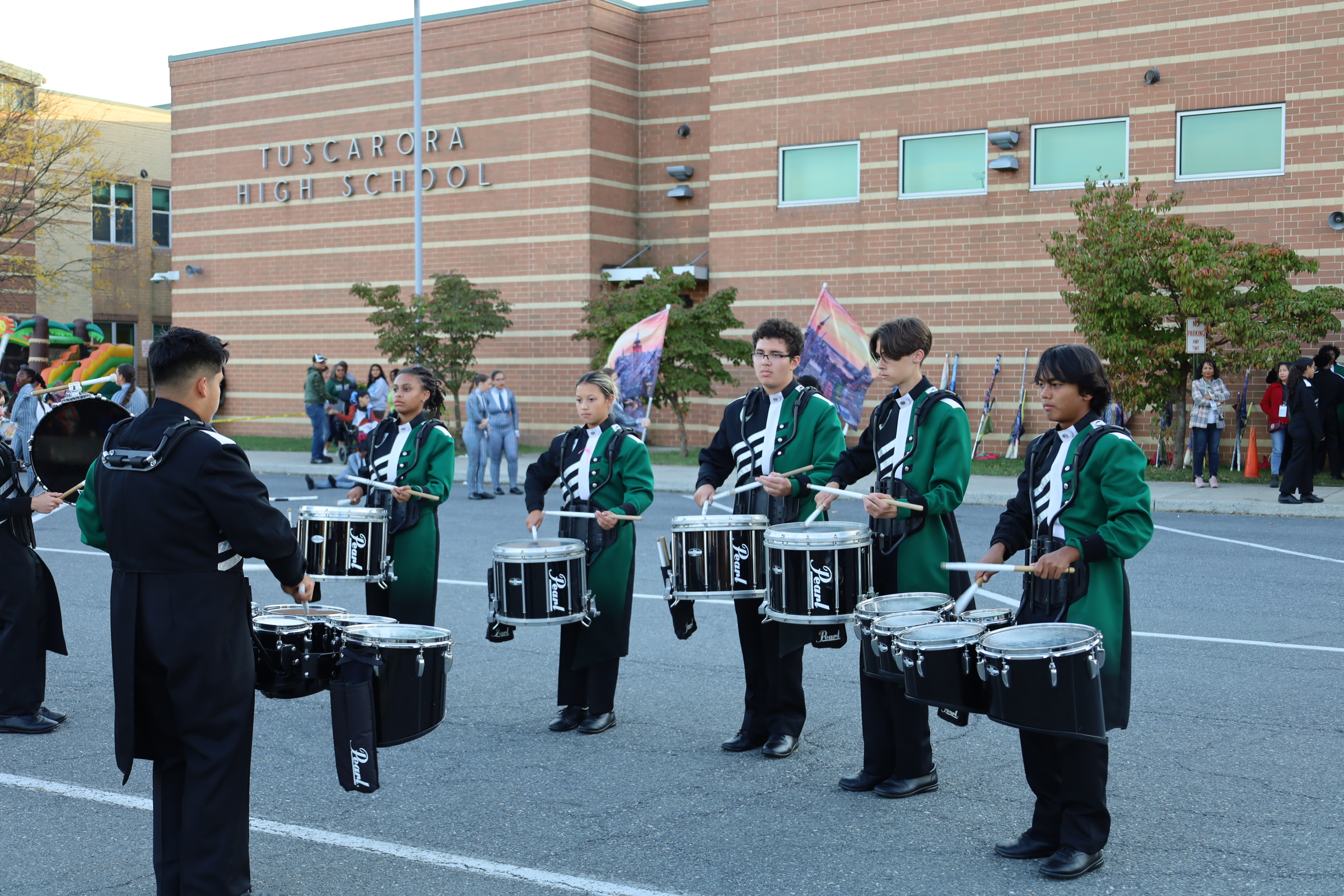
Today you will learn about each instrument in the drumline and their purpose.
Marching Snare Drums
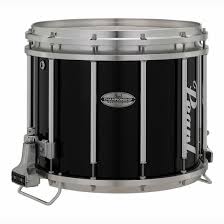
The Snare Drum's role in the drumline is primarily to keep tempo and rhythm for the other
drums in the drumline. The members of the drumline that maintain tempo the best
are usually put on snare. The snare drums also take up the high end part of the sound spectrum in the drumline.
It is also important to note the difference between concert/drumset snare drums and marching snare drums.
Marching snare drums are usually much larger and are tuned at a much higher tension compared to concert and
drumset snares.
Marching Tenors/Quads
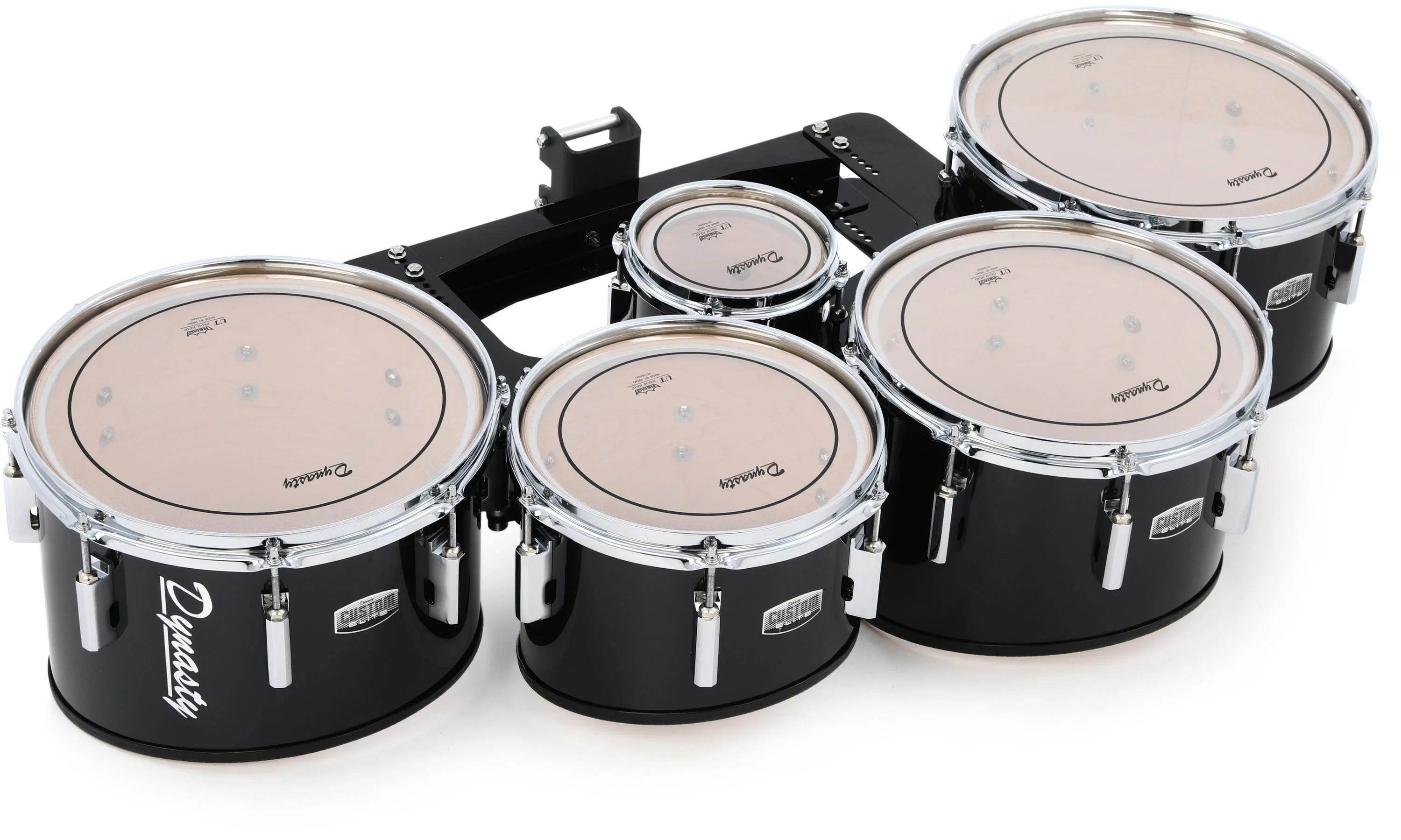
The Marching Tenors/Quads (both names refer to the same drums) are probably the most difficult drums to play
in the drumline. They have to deal with playing on 5 or 6 drums (depending on your configuration). The quads take up the mid range
sound of the drumline and provide texture with the differing tones of the drums. Quads can come with 1 or 2 or even sometimes no
spocks, which are the really small drums, but every set of quads should come with the 4 large drums.
Marching Bass Drums
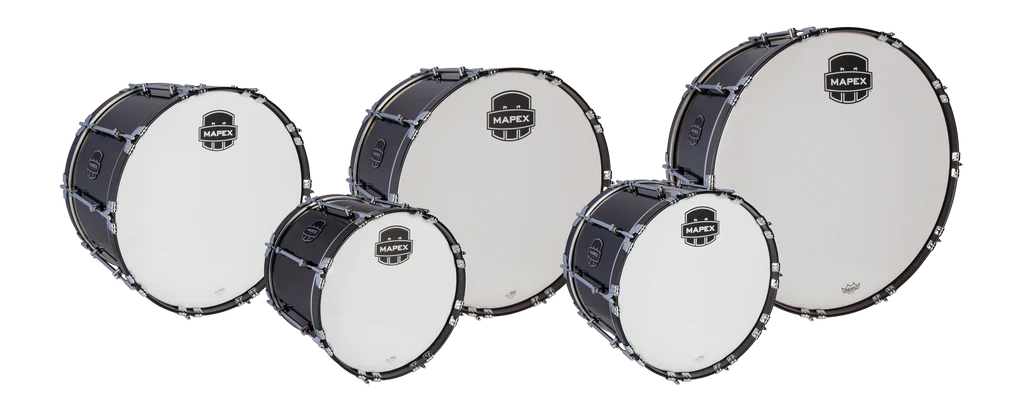
Marching Bass Drums are the probably the most overlooked drum within the drumline. They definitely aren't the most
flashy compared to snares and quads, but they do so much for the drumline's overall sound that when you take them out
you'll almost certainly feel like something is missing. Obviously, the bass drums make up the low end sound of the drumline.
Often, rhythms are split across the smaller and bigger bass drums to create sounds similar to quads, just on the low end.
The bass drums really set the tone for the whole drumline and should not be overlooked.